What Is a Residential Service Agency in Maryland?


What Is a Residential Service Agency in Maryland?
September 7, 2026
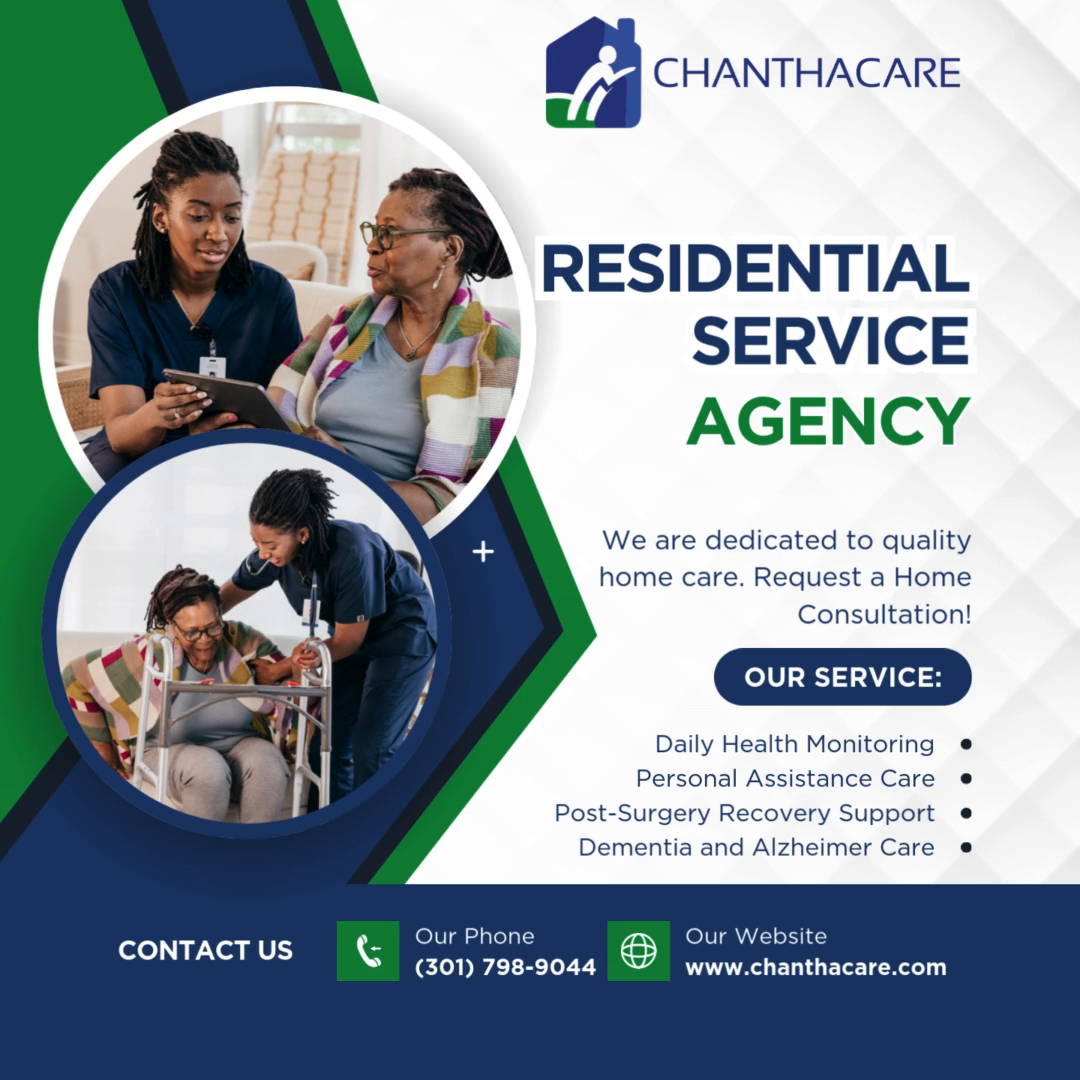
If you have started looking for home care for a parent or a spouse in Maryland, you have probably run into the phrase “Residential Service Agency” and wondered what it means. It sounds like a place someone moves into. It is not. It is the license category Maryland uses for agencies that send caregivers and nurses into your own home.
Understanding what that license covers is the fastest way to tell a legitimate agency from an unlicensed one, and to work out whether the agency you are calling can actually provide the level of care your family needs. Here is what the term means, what these agencies are allowed to do, how they are paid for, and what to ask before you sign anything.
What a Residential Service Agency actually is
A Residential Service Agency, usually shortened to RSA, is a home care agency licensed by the Maryland Department of Health through its Office of Health Care Quality. The rules these agencies operate under are set out in the Code of Maryland Regulations at COMAR 10.07.05, under Health-General Article, Title 19, Subtitle 4A.
The word “residential” refers to where the care happens, not where the client lives permanently. An RSA delivers care in the client’s own residence. Nobody moves anywhere. That is the single most common misunderstanding about the term, and it is worth clearing up early, because families sometimes skip past licensed agencies thinking they are facilities.
The license is not a formality. The Office of Health Care Quality reviews an agency’s policies, staffing plans, training records and client documentation before issuing it, and inspects against those same regulations afterwards. An agency operating without one is operating outside the law.
What an RSA can provide
The range is wider than most families expect. Depending on what a particular agency is licensed and staffed for, an RSA may provide:
Skilled nursing care in the home, delivered by licensed nurses
Home health aide support with activities of daily living, such as bathing, dressing, grooming, toileting and mobility
Medication reminders and support with a prescribed care plan
Companionship, meal preparation and household support alongside hands-on care
Scheduling that ranges from a few hours a week to overnight and around-the-clock coverage
Not every RSA offers all of this. Each agency’s license lists the specific services it is approved to deliver, which is why two agencies with the same license type can offer quite different care. Always ask an agency which services appear on its own license rather than assuming the category covers everything.
RSA or home health agency? The difference matters
Maryland licenses home care under more than one category, and families are often quoted by agencies in different categories without anyone explaining the distinction.
A Residential Service Agency is licensed under COMAR 10.07.05. A home health agency is licensed separately under COMAR 10.07.10 and has to obtain a Certificate of Need from the Maryland Health Care Commission before it can be licensed at all. Home health agencies are the category that typically pursues Medicare certification for short-term, physician-ordered skilled care after a hospital stay.
In practical terms, the distinction usually shows up in how the care is paid for and how long it lasts. Medicare’s home health benefit covers a limited course of skilled care ordered by a physician, not ongoing daily help at home. Long-term support with daily living is generally funded privately or through Medicaid programs, and it is the kind of care Residential Service Agencies are built around.
How home care gets paid for in Maryland
There are two routes most Maryland families end up taking.
Medicaid waiver programs
Maryland Medicaid funds home and community-based services through programs such as Community First Choice, which exist specifically so that people who would otherwise need nursing-home level care can stay in their own homes instead. Eligibility depends on both financial criteria and an assessment of care needs, and the agency you choose has to be enrolled as a Medicaid provider for that funding to reach them.
If you think a waiver program might apply to your family, ask an agency directly whether it accepts Medicaid waiver clients before you go any further. Not all do.
Private pay
Many families pay directly, either out of pocket or through a long-term care insurance policy. Private pay usually gives the most flexibility over scheduling and the choice of caregiver, since the arrangement is not bound by a program’s approved hours or service plan.
Some families combine the two, or start privately while a waiver application is being processed. An agency that handles both can carry you through that transition without a change of caregiver.
How to check that an agency is really licensed
Ask for the agency’s RSA license number and the name it is held under, then verify it with the Office of Health Care Quality rather than taking a website’s word for it. A licensed agency will give you that number without hesitation.
Two things worth checking while you are at it: that the license is current, and that the legal name on the license matches the business you are actually contracting with. Marketing names and licensed entity names are not always the same thing.
Questions to ask any agency before you sign
Whichever agency you are considering, these questions will tell you most of what you need to know:
What is your RSA license number, and which services are listed on it? This tells you what the agency is actually authorised to provide.
Which counties do you serve? Agencies have real service areas. An agency that stretches to reach you will struggle to cover a shift when someone calls out sick.
Do you accept Medicaid waiver, private pay, or both? Establish this before you invest time in an assessment.
Are your caregivers employees or independent contractors? Employment status affects supervision, training, insurance and who is liable if something goes wrong.
Who supervises the care, and how often is the plan reviewed? There should be a named person and a schedule, not a vague answer.
What happens when a caregiver is sick or on vacation? Coverage gaps are the most common complaint families have about home care.
Can we meet the caregiver before care starts? The match matters as much as the credentials.
What are your minimum hours, and how does billing work? Minimum shift lengths vary and can change the real cost considerably.
Write the answers down. When you are comparing three agencies a week later, the details blur together quickly.
Choosing well
The license is the floor, not the ceiling. It tells you an agency has met the state’s requirements and can be held to them. What it cannot tell you is whether the caregiver who arrives on Monday morning will be someone your mother is glad to see.
So use the license to narrow the field, then judge the rest on how the agency answers your questions. An agency that explains its service area honestly, tells you plainly what it does not do, and gives you its license number without being pushed is usually an agency worth talking to further.
Chanthacare LLC is a Maryland-licensed Residential Service Agency providing skilled nursing and home health aide services in clients’ homes throughout Montgomery, Howard, and Prince George’s counties. Medicaid waiver and private pay accepted. License RSA-02383.
Tags :
example, category, and, terms
Share This :
Recent Posts
Emergency Call
Lorem ipsum dolor sit amet, consecte adipiscing elit, sed do eiusmod tempor incididunt ut labore et dolore